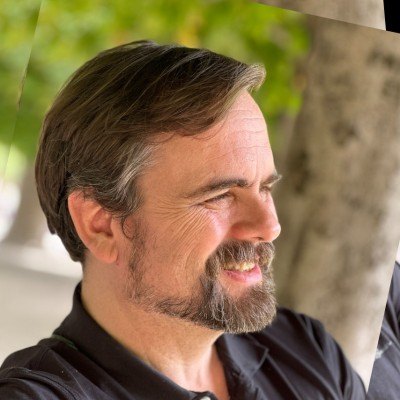
Peter D. BethkeSiteShell.netSpring Hollow Publishing, Inc.

Peter D. Bethke

I build backends AI agents can safely operate.

President and lead consultant at SiteShell.net, building AI-agent-operable platforms. Creator of corral — mind the herd.

More than thirty years of full-stack engineering, spent at the frontier: early team-based CMS, enterprise document systems, and now agentic AI and multi-tenant security. I went deep on identity and safety because autonomy without guardrails is a liability.

I work where business meets engineering — degrees in English and screenwriting trained me to turn business problems into systems, and to explain those systems back to the people who fund them.

Open to full-time rolespdbethke@siteshell.netLinkedInGitHub

Peter D. Bethke
Charlottesville, Virginia

He delivered the results that allowed us to grow to over $100 million in revenue… the first and only person we would call.

Rossi Bonugli, co-founder, Cella, Inc. (now part of Randstad US Technologies Group)

I deeply appreciate his steadfastness in defending our team’s decisions under pressure.

Agon Vuniqi, colleague at Randstad; now Senior Software Engineer (AI) at Bloomberg

Work

01
Go
Elastic-2.0
Code →Live →

corral

Prove your tests would catch it.

Corral breaks your code on purpose and checks whether your tests notice. It plants faults that violate a stated guarantee, runs your own suite against each one in a sandbox, and reports how many it killed — measured by execution, never taken on a model’s word.

The constraint underneath is nemo iudex in causa sua: the party that did the work never certifies the work, and a run where the critic model matches the writer model is refused. It ships as one command, corral certify --local, against your own provider key with no server.

Unedited output of autonomous corral runs is preserved as evidence, defects included: corral-run-js-lru-cache and corral-run-python-ratelimit.

02
Django
DRF
TypeScript
SvelteKit
Happy to walk through it — just ask

ProductBinder / WebOffice — private · commercial · in development

A multi-tenant publishing platform.

Product and listing management, a CMS with inline page and navigation editing, an events subsystem with full RFC 5545 recurrence, and a commerce layer covering rate cards, campaigns, invoicing, and accounting sync.

A Django/DRF core behind a versioned TypeScript SDK, consumed by a SvelteKit admin and server-rendered public sites. Fifteen-plus coordinated repositories with a cascading CI/CD pipeline onto self-hosted infrastructure. The largest system in the portfolio and the clearest evidence of working at platform scale — which is why it headlines despite not being clickable.

A commercial platform I’m building. It runs in production for a regional media business and is not yet on the market.

03
Python
zero runtime dependencies
Code →

kirby-cost

The HERO System 6E build and cost engine, ported from scratch.

A from-scratch port of the HERO System 6E character build and cost engine, validated to 100% parity with the reference implementation across 656 fixtures, every character exact on every object. Parity is a release gate, not a one-time claim.

Ships no licensed Hero Games content. Part of the Kirby engine line, three separate zero-runtime-dependency Python libraries: kirby-cost costs a build, kirby-combat resolves 6E combat, and kirby-sheet reads a HERO Designer character and writes it back out as JSON, text, HTML, PDF, or .hdc. The credential here is the parity number, and it is checkable because the code is public.

All work →

Writing

Where the boundary lives

Who may write, what they may write, and the place I put the boundary that an agent walks straight past.

Your codebase is the prompt

Coding agents do the unglamorous groundwork when building from scratch — and skip it in code where someone else already did.

All writing →